


Most founders believe investors reject startups because the idea is not good enough. However, many promising startups lose investor attention because the idea was not communicated effectively.
Investors see countless presentations every week. They do not have the time or patience to decode complicated slides, long paragraphs, or vague business models. Within the first few minutes, they are already evaluating whether the startup feels investable.
That is why a pitch deck is not just a presentation. It is your startup’s first impression, your growth story, and your fundraising strategy combined into one.
A strong pitch deck helps investors quickly understand:
- What problem you are solving
- Why your solution matters
- How big the opportunity is
- Why your team can execute
- And why now is the right time to invest
Why Most Startup Pitch Decks Fail
One of the biggest mistakes founders make is trying to say too much.
Many pitch decks are overloaded with technical details, industry jargon, complex charts, and unnecessary information. Founders often believe that more information creates credibility. But it adds confusion.
Investors don’t expect perfection. They are looking for clarity, confidence, and market potential.
If your deck cannot explain your startup in simple terms, investors may assume the business itself lacks focus.
Another common issue is weak storytelling. Startups usually focus on solving problems, but while presenting, the focus should be on highlighting the pain point rather than product features.
A pitch deck should guide investors:
Problem → Solution → Opportunity → Growth Potential.
The presentation loses impact if the narrative is disconnected.
What Investors Actually Want to See
Founders often focus heavily on design aesthetics while ignoring the actual investor mindset.
Most investors evaluate startups based on a few key questions:
- Is this a real problem worth solving?
- How large is the market opportunity?
- Does this business have growth potential?
- Is the founding team capable of executing?
- Is there evidence of traction or demand?
Your pitch deck should answer these questions quickly and confidently.
Investors also appreciate simplicity. Clean slides with concise messaging are usually more effective than visually crowded presentations.
A well-designed deck makes investors feel that the founders understand their business deeply.
The 10-Slide Pitch Deck Structure
1. Vision Slide.
Start by explaining what your company does in simple terms.
Avoid buzzwords and unnecessarily technical phrases. A simple one-line value statement works best.
Example:
“We help SaaS companies reduce customer churn using predictive AI analytics.”
The first slide should clearly indicate direction and significance.
2. The Problem
This is where many founders lose investors.
Do not just describe a generic problem. Show why the problem matters and who experiences it.
Good investor decks make the pain feel real.
Use relatable examples, market inefficiencies, or operational challenges to explain the gap in the industry.
3. Your Solution
Now, present your product or service.
Keep your explanation concise and focused on results rather than details.
Investors are less concerned with technological details. They want to know how your product improves lives, saves time, or increases revenue.
This section should explicitly explain why your startup differs.
4. Market Opportunity
Investors prefer scalable businesses.
Show the scale of your market with TAM (Total Addressable Market), SAM (Serviceable Addressable Market), and SOM (Serviceable Obtainable Market) data, but avoid making exaggerated billion-dollar statements without context.
Rather than saying:
“Our market includes everyone.”
Be specific about your target audience and expansion possibilities which helps build credibility.
5. Product Demo or Workflow
This is when visuals become important.
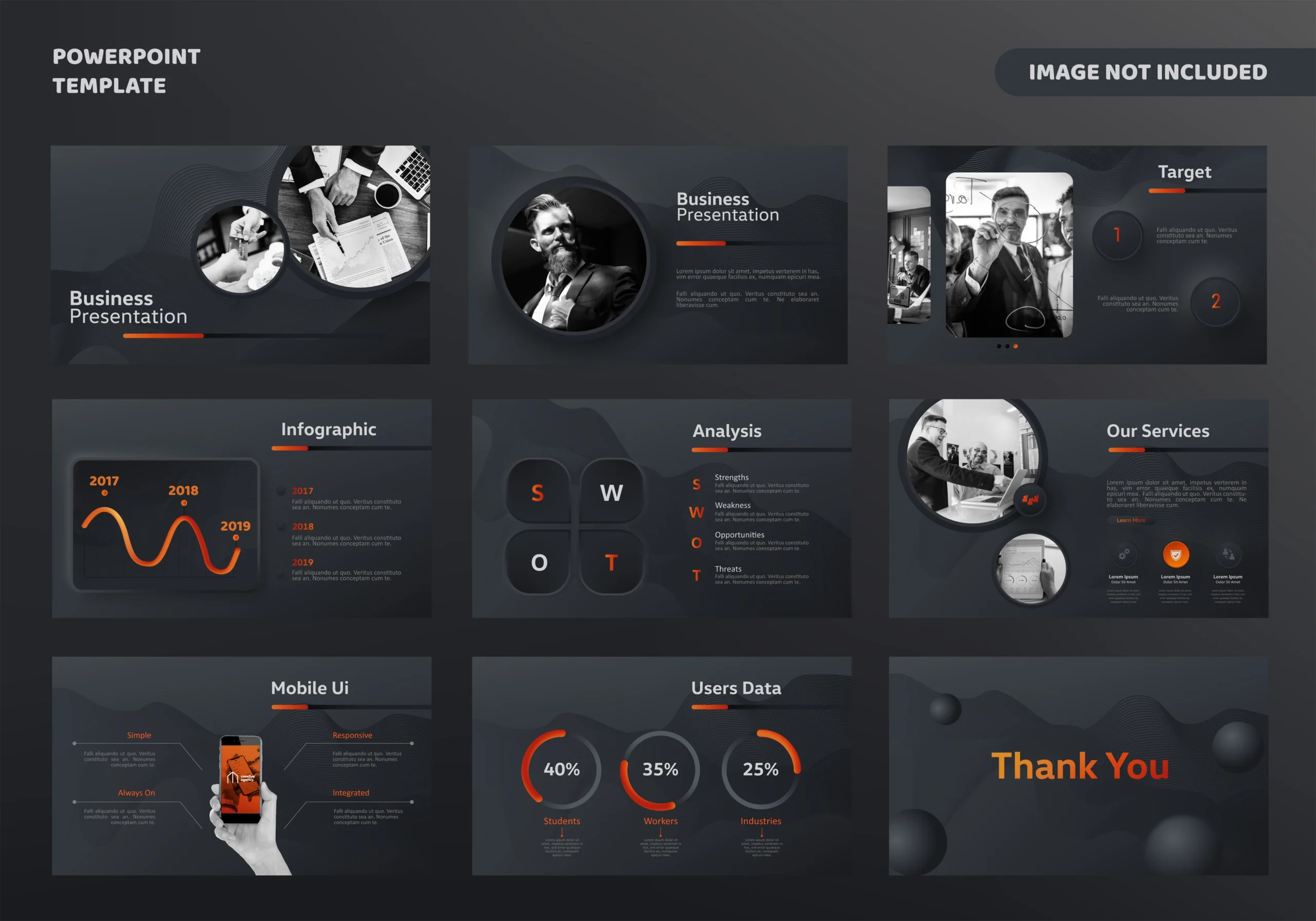
Present pictures, workflows, dashboards, or product experiences to help investors quickly grasp the user journey.
Avoid overloading the slide with UI images.
One perfect image speaks better than five crowded screenshots.
6. Business Model
Investors need clarity on how your startup makes money.
Explain:
- Pricing structure
- Revenue streams
- Customer acquisition strategy
- Scalability potential
- Keep this section practical and transparent.
If your monetization model feels vague, investors may question long-term sustainability.
7. Traction and Validation
This is often the most important section in the entire deck.
Traction reduces investor risk.
Even early-stage startups can show momentum through:
- Revenue growth
- Beta users
- Partnerships
- Customer testimonials
- Waitlists
- User retention
- Engagement metrics
Real-world validation builds confidence faster than promises.
8. Competitive Landscape
A common mistake that founders make is to say:
“We don’t have any competitors.”
Every firm faces competition, sometimes indirect.
Instead of pretending that competitors do not exist, prove to investors why your idea is unique.
A simple comparison chart might help you express your advantage effectively.
9. Team Slide
Investors invest in people as much as ideas.
Highlight the experience, expertise, and strengths of your founding team.
You do not need a team filled with executives from Fortune 500 companies. But investors should feel that your team understands the market and can execute the vision.
10. Funding Ask
End with clarity and confidence.
Mention:
- How much funding you are raising
- Where the capital will be used
- What milestones you aim to achieve
Avoid vague statements like:
“We want to scale aggressively.”
Be specific about growth plans and execution priorities.
Pitch Deck Design Mistakes Investors Notice Immediately
Even strong startups can weaken their pitch with poor presentation choices.
Some of the most common mistakes include:
- Too Much Text
- Weak Visual Structure
- Generic Messaging
- No Data or Validation
- Inconsistent Branding
Design Principles to Improve Investor Engagement
Practice these principles to balance storytelling and simplicity throughout the presentation:
- Use short headlines instead of long paragraphs
- Focus on one key message per slide
- Use whitespace to improve readability
- Prioritize charts and visuals over excessive text
- Create a logical narrative flow
- Highlight growth metrics visually
- Maintain consistent branding and typography
Why Many Startups Outsource Pitch Deck Design
Design skills alone are insufficient to create an investor-ready deck.
Founders frequently face challenges in balancing storytelling, strategy, investor psychology, branding, and presentation clarity.
That is why many startups use professional PowerPoint presentation design agencies.
An expert team can help:
- Simplify complex concepts
- Improve messaging.
- Structure the investor narrative.
- Create visually appealing slides.
- Position the startup more strategically.
Sometimes, a minor improvement in presentation clarity can drastically transform investor talks.
How Passion Minds Helps Startups Build Investor-Ready Pitch Decks
If your current deck feels cluttered, confusing, or difficult to present, it may be time to rethink the structure and storytelling behind it.
A well-designed pitch deck does not just help investors understand your business.
It helps them believe in it.
At Passion Minds Pvt Ltd, a Digital Marketing Agency in India, we help founders communicate their business ideas in a way that investors can quickly understand and remember. From refining the startup narrative to designing polished investor presentations, our goal is to help businesses present themselves with confidence.
Book a strategy call with Passion Minds and start building a pitch deck investors will remember.


Comments are closed