

Manufacturing Companies don’t usually get customers from one social media post or one Google search.
B2B buyers often spend weeks researching suppliers, comparing capabilities, checking websites, reviewing case studies, and speaking with multiple vendors before making a decision.
At Passion Minds Pvt Ltd, a B2B digital marketing agency focused on the manufacturing industry, we build digital marketing funnels around this longer buying journey.
Our goal is simple: turn online visibility into qualified manufacturing leads.
1. I Start With the Buyer, Not the Channel
Before creating campaigns, I first understand who the company wants to attract.
For a manufacturing business, this could be:
- Procurement managers
- Plant managers
- Purchase managers
- Engineering heads
- Business owners
- OEM decision-makers
- Distributors and industrial buyers
I also identify their problems, buying intent, industries served, locations, product requirements, and typical decision-making process.
This helps us create a funnel based on real buyer intent instead of Generic Marketing.
2. I Build Awareness Through Search and Content
The first stage of the funnel is about getting discovered.
Manufacturing buyers search for solutions such as:
- “industrial automation manufacturer”
- “custom packaging machine manufacturer”
- “CNC machining company”
- “industrial component supplier”
This is where SEO and content marketing become important.
At Passion Minds, we create content around the questions and problems manufacturing buyers are already searching for.
The strategy can include:
- Industry-specific SEO
- Product and service pages
- Technical blogs
- Case studies
- LinkedIn content
- Google Business Profile optimization
- AI Search Optimization
- Answer Engine Optimization
The objective is to put the manufacturer in front of potential buyers when they start their research.
3. I Turn Website Visitors Into Prospects
Getting traffic is only the beginning.
A manufacturing website should quickly answer three questions:
- What do you Manufacture?
- Who do you manufacture it for?
- Why should a buyer contact you?
I structure landing pages around these questions.
Instead of creating generic service pages, we focus on important commercial information such as manufacturing capabilities, industries served, certifications, production capacity, materials, applications, technical specifications, and previous projects.
Strong CTAs are also important.
For example:
- Request a Quote
- Talk to an Engineer
- Send Your Requirement
- Request Product Information
The CTA should match the buyer’s intent.
4. I Use Content to Build Trust
Manufacturing buyers need more than marketing claims.
They want evidence.
This is where content such as case studies, project examples, certifications, factory photographs, product demonstrations, technical documentation, customer testimonials, and industry expertise become valuable.
For example, instead of saying:
“We provide high-quality industrial solutions.”
We can demonstrate:
How we helped a manufacturing client reduce production downtime by X%.
Specific proof makes the company more credible and helps move prospects further down the funnel.
5. I Build a Lead Nurturing System
Not every website visitor is ready to request a quotation.
Some are still researching.
Others may be comparing suppliers.
That’s why I recommend lead nurturing.
Depending on the business, this can include:
- Email follow-ups
- Retargeting campaigns
- LinkedIn content
- Product guides
- Technical resources
- Case studies
- Follow-up calls
- CRM-based lead tracking
The goal is to stay relevant until the prospect is ready to start a conversation.
6. I Measure Business Results, Not Just Traffic
A manufacturing digital marketing funnel should not be judged only by impressions, clicks, or website traffic.
I track metrics that connect marketing activity with business opportunities.
For example:
Website Visitors → Qualified Leads → Sales Conversations → Quotations → Customers
I use tools such as Google Analytics, Google Search Console, CRM data, and advertising platforms to understand where leads are coming from and which channels are contributing to business growth.
This also helps identify where the funnel is losing potential customers.
7. I Continuously Improve the Funnel
A funnel is never finished.
After collecting data, we identify opportunities to improve:
- Landing pages
- Keyword targeting
- Content
- CTAs
- Lead forms
- Ad campaigns
- Retargeting
- Follow-up processes
- Conversion rates
Small improvements at different stages can have a significant impact on the number of qualified leads generated.
The Funnel I Use for Manufacturing Companies
At Passion Minds Pvt Ltd, I think about the funnel as:
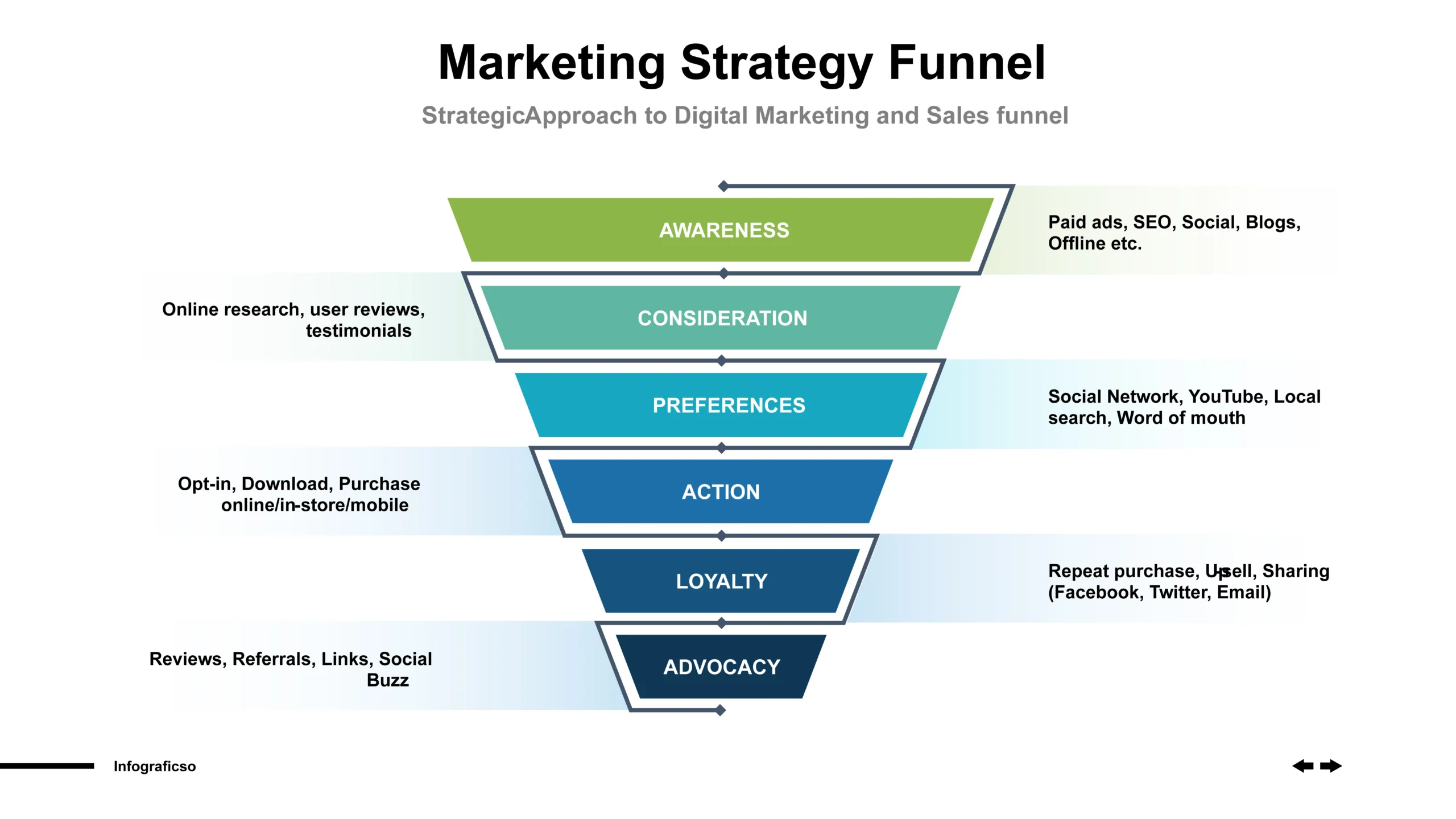
Search & Social → Content → Website → Trust → Lead → Nurturing → Sales Conversation → Customer
The important part is that every stage has a purpose.
SEO creates visibility.
Content builds authority.
The website creates interest.
Proof builds trust.
CTAs generate enquiries.
Nurturing keeps prospects engaged.
Sales converts qualified opportunities into customers.
Final Thought
Digital marketing for manufacturing companies is not about generating the highest number of visitors.
It is about attracting the right industrial buyers and creating a system that moves them from research to enquiry.
That is how we approach B2B digital marketing at Passion Minds Pvt Ltd.
If you are a manufacturing company looking to build a predictable digital lead generation funnel, let’s connect.


Comments are closed