

If Your Manufacturing Website Confuses Visitors in the First 10 Seconds, You’re Losing Industrial Leads
Many manufacturing companies invest heavily in machinery, production capability, certifications, automation systems, and operational excellence. But their websites still fail to answer three basic questions industrial buyers immediately ask:
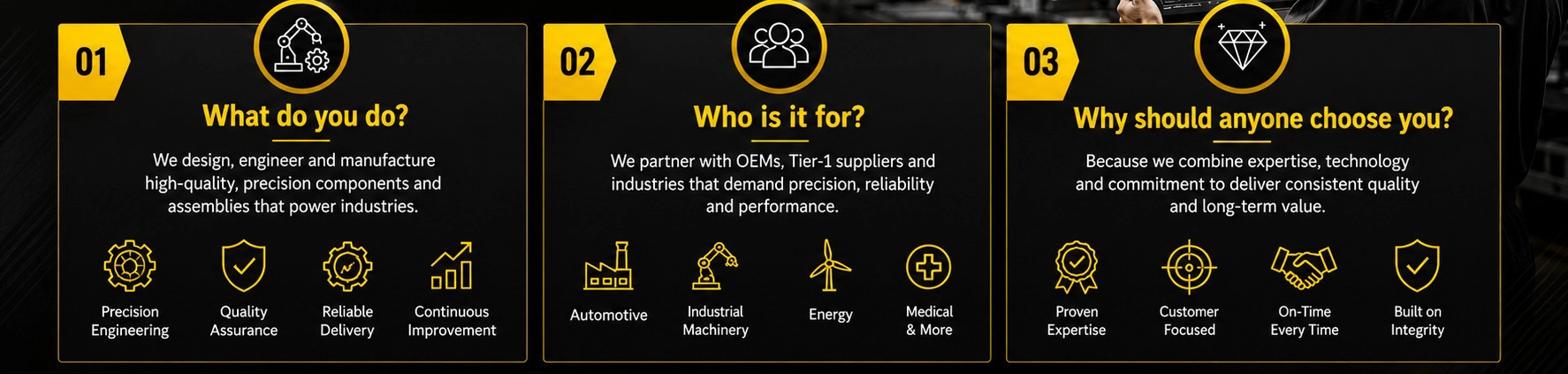
- What do you do?
- Who is it for?
- Why should anyone choose you?
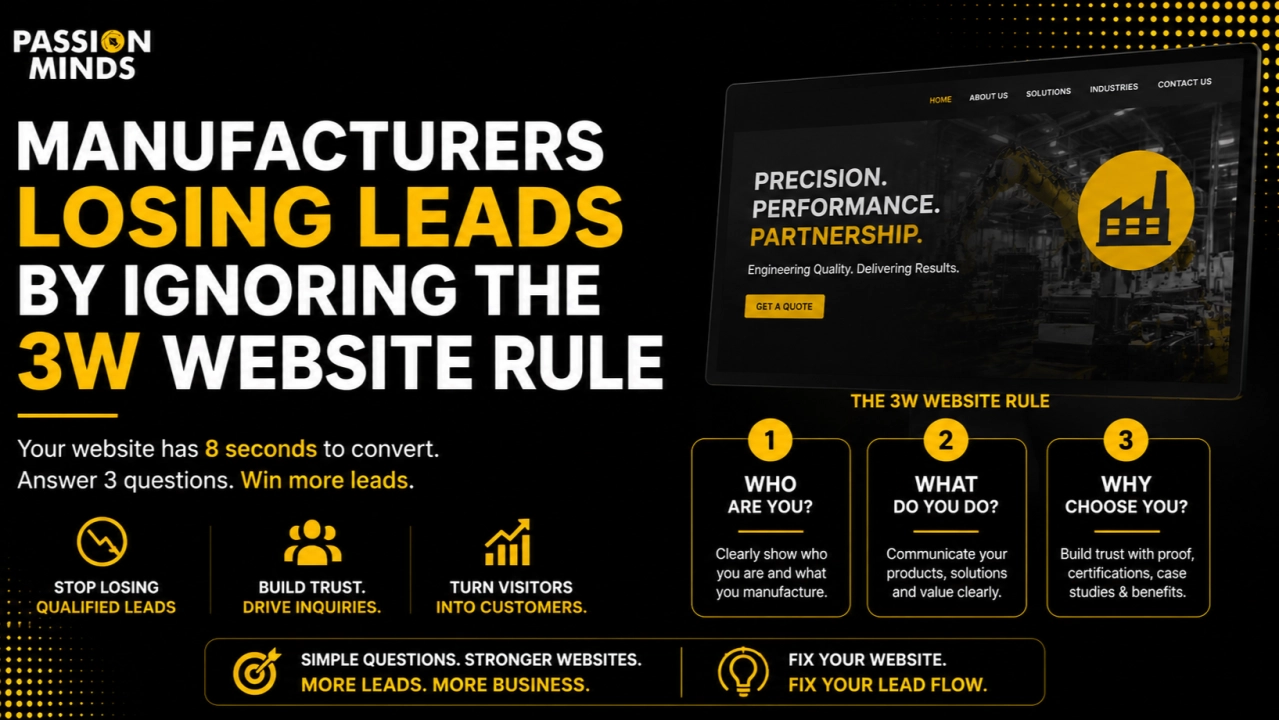
This is where the 3W Rule becomes critical for modern manufacturing websites.
In industrial sectors, websites are no longer just digital brochures they are trust-building platforms, technical sales tools, and lead-generation systems operating 24/7.
if you have a packaging manufacturer, industrial automation company, heavy engineering business, or industrial cybersecurity provider, your website messaging directly impacts buyer confidence. Today’s industrial buyers make decisions faster than ever, and a weak online presence costs real opportunities.
That’s where Passion Minds Pvt Ltd steps in a specialized website design company for manufacturers that understands your industry’s language, buyer psychology, and technical complexity. We build websites that don’t just look professional they convert.
Why the 3W Rule Matters in Manufacturing
In many industrial companies, websites are built from an internal perspective.
The homepage talks about:
- “Since 1998”
- “Quality and Commitment”
- “Customer Satisfaction”
- “Leading Manufacturer”
But industrial buyers are not searching for generic claims. Procurement teams, plant heads, technical evaluators, and automation decision-makers want immediate clarity.
They want to understand:
- What specific problem you solve
- Whether you serve their industry
- Why your capability is relevant to their operational needs
If that clarity is missing, they leave. This is one of the biggest weaknesses we consistently observe in manufacturing websites.
The First W: WHAT Does Your Company Actually Do?
This sounds simple, but many industrial websites fail here.
A manufacturing homepage should instantly communicate:
- Core products or services
- Industry specialization
- Technical capability
- Operational expertise
Common Manufacturing Website Mistake
Many websites use vague headlines such as:
- “Engineering Excellence”
- “Innovative Industrial Solutions”
- “Delivering Quality Worldwide”
These phrases sound professional but communicate nothing specific.
Better Manufacturing Messaging
Instead of generic branding statements, clarity wins.
For example:
- “Custom Packaging Solutions for Food & Pharmaceutical Manufacturers”
- “Industrial Automation Systems for High-Speed Production Lines”
- “Cybersecurity Solutions for Manufacturing Infrastructure”
Industrial buyers scan quickly. Clear positioning reduces confusion and increases engagement.
But in manufacturing, clarity becomes even more important because industrial buyers often evaluate multiple suppliers simultaneously.
If your website lacks specificity, you become forgettable.
The Second W: WHO Is Your Website For?
This is where most manufacturing websites completely fail.
Many industrial companies try to speak to everyone:
- Automotive
- Pharma
- Food
- Chemical
- Textile
- OEMs
- Export buyers
As a result, the messaging becomes too broad.
Industrial Buyers Want Relevance
A packaging company serving pharmaceutical brands should immediately communicate:
- Compliance understanding
- Packaging standards
- Industry certifications
- Production precision
An automation company targeting manufacturing plants should showcase:
- Downtime reduction expertise
- Integration capability
- Industrial control systems knowledge
- Operational efficiency outcomes
Specificity builds trust.
Website Strategy Insight
Industrial buyers subconsciously ask: “Does this company understand businesses like ours?”
The fastest way to answer that question is through:
- Industry-specific landing pages
- Sector-focused case studies
- Specialized messaging
- Relevant visuals and terminology
This is where manufacturing-focused website strategy differs from traditional corporate web design.
The Third W: WHY Should Industrial Buyers Care?
This is the most important question.
Industrial buyers are outcome-driven.
They care about:
- Production efficiency
- Cost reduction
- Reliability
- Compliance
- Operational continuity
- Risk reduction
- Scalability
Yet many manufacturing websites focus heavily on company introductions instead of buyer outcomes.
Example
A packaging manufacturer may say: “We manufacture flexible packaging solutions.”
But a stronger message would be: “Reduce packaging waste and improve production efficiency with custom flexible packaging solutions designed for high-volume manufacturing.”
One describes the company.
The other explains business value.
That difference directly impacts lead generation quality.
Why Manufacturing Websites Often Underperform
After analyzing industrial websites across packaging, automation, and heavy industries, several recurring problems appear repeatedly:
Overly Technical Without Buyer Clarity
Engineering depth is important, but websites must still communicate clearly to decision-makers.
- Weak Homepage Messaging
Visitors often cannot understand the company within seconds.
- Poor Conversion Strategy
No clear CTA, inquiry flow, or lead-generation structure.
- Generic Design Templates
Industrial companies frequently use outdated corporate layouts that fail to establish authority.
- No Industry Positioning
The website lacks specialization and buyer-focused communication.
These problems reduce trust even if the company itself is highly capable operationally.
Manufacturing Websites Should Function as Sales Infrastructure
Modern industrial websites should support:
- Sales teams
- Procurement conversations
- International visibility
- SEO performance
- Lead qualification
- Technical credibility
This requires combining:
- UX clarity
- SEO strategy
- Industrial positioning
- Conversion-focused messaging
- Industry-specific content
The strongest manufacturing websites today act as digital sales engineers.
They educate, qualify, and build trust before the first meeting happens.
Actionable Recommendations for Manufacturing Companies
1. Rewrite Your Homepage Headline
Make it industry-specific and outcome-driven.
2. Create Industry-Focused Pages
Separate pages for pharma, food, automotive, or industrial sectors improve relevance and SEO visibility.
3. Show Operational Capability Clearly
Use process visuals, certifications, plant images, and production strengths strategically.
4. Add Strong CTAs
Examples:
- Request Technical Consultation
- Download Capability Brochure
- Schedule Factory Discussion
5. Improve Lead Flow
Industrial websites should guide users toward inquiry actions naturally.
6. Prioritize Mobile & Speed Optimization
Many procurement teams now review suppliers on mobile devices before deeper evaluation.
Final Thoughts
The manufacturing industry has become digitally competitive. Industrial buyers now compare suppliers online long before direct conversations begin.
A manufacturing website that fails to communicate:
- What you do
- Who you serve
- Why you matter
will struggle to generate high-quality industrial leads.
The 3W Rule is not just a UX principle. For manufacturers, it is a business-growth strategy.
At Passion Minds Pvt Ltd, a B2B Digital Marketing Agency in India, we believe manufacturing websites should do more than “look professional.” They should communicate technical authority, industry relevance, and business value clearly enough to convert industrial visitors into serious inquiries. Because in B2B manufacturing, clarity builds trust. And trust generates leads.


Comments are closed