Every day, people scroll through hundreds of posts, ads, and videos across platforms like LinkedIn, Instagram, Facebook, and YouTube. In that endless stream of content, brands have only a few seconds to capture attention. This is where creative design plays an important role.
Marketers frequently ask,
Do static creatives still have a place in today’s digital landscape, or have motion graphics become the clear winner?
Actually, there is no fixed answer to this question.
The creative format that delivers the best engagement depends on your campaign objective, target audience, platform, and where your customer is in the buying journey. A well-designed static graphic can outperform an animation in a lead generation campaign, while a short motion graphic may generate significantly higher awareness for a new product launch.
Why Choosing the Right Creative Format Matters
When you are advertising, the creative is the critical factor. The right visual format can improve brand recall, increase user interaction, and encourage more qualified leads.
Modern consumers process visual information much faster than text, making creative assets one of the biggest drivers of campaign performance. Whether you’re running paid advertisements, publishing social media posts, or launching a new product, your creative plays a direct role in how people respond
The appropriate question is:
Which format is better for my specific marketing objective?
What Are Static Creatives?
Static creatives are visual designs. They do not include animation or movement. They communicate information through imagery, typography, colours, and layout in a single frame.
Although they’re often considered the traditional approach to digital marketing, static creatives remain one of the most effective tools for communicating messages quickly and clearly.
Common examples include:
- Social media posts
- Product banners
- Display advertisements
- Infographics
- Email marketing graphics
- LinkedIn carousel designs
- Promotional posters
- Website banners
One of the biggest advantages of static creatives is their simplicity. They can be created relatively quickly, are easier to update, and usually require a lower production budget compared to animated content.
When Static Creatives Are Used
Straightforward communication is the prime objective of static creatives. They are used for:
- Product offers and discounts
- Event announcements
- Product specification highlights
- Industry insights
- Brand awareness campaigns
- Display banners on websites
- Advertisements for lead generation
- Email marketing campaigns
For B2B companies operating in manufacturing or industrial sectors, static creatives often make technical information easier to consume without overwhelming the audience.
What Are Motion Graphics?
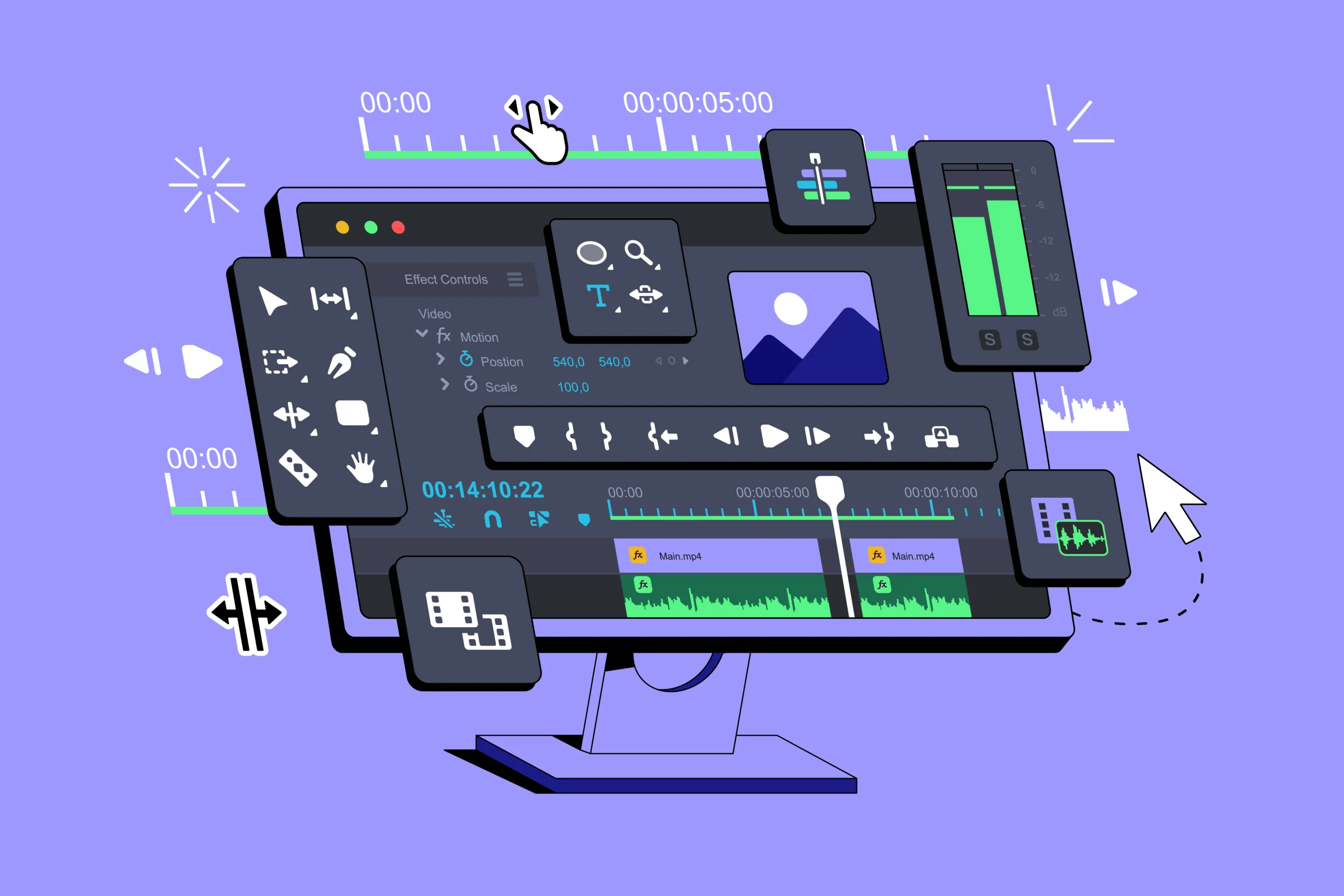
Motion graphics is the combinaion of graphic design and animation used to create visually engaging content. Instead of presenting information in a single image, they use movement, transitions, icons, text animations, and illustrations to convey information.
Traditional videos mostly rely on live-action footage. Where as motion graphics focus on animated visual elements which make them ideal for explaining products, demonstrating processes, and simplifying technical information.
Motion graphics are used in:
- Product demonstration videos
- Animated social media advertisements
- Brand introduction videos
- Explainer videos
- Logo animations
- Trade show presentations
- Website hero banners
- Educational marketing content
Motion graphics guide the viewer’s attention. Animation naturally draws the eye, making it easier to explain complex ideas in a short amount of time.
When Motion Graphics Are Used
Motion graphics are particularly valuable when businesses need to educate rather than simply inform.
For example, a manufacturer is introducing an automated packaging machine to the market.
A static image can showcase the machine and list its specifications.
However, a 30-second motion graphic can demonstrate how products move through the packaging line, highlight automated quality checks, explain speed improvements, and visually compare production efficiency before and after implementation.
Animation allows the potential buyers to see the value in action instead of imagining the whole process.
Motion graphics are used for:
- New product launches
- Demonstration of the manufacturing process
- Technical product explanations
- Brand storytelling
- Corporate presentations
- Exhibition displays
- Digital advertising campaigns
- Awareness-focused marketing initiatives
Motion graphics are used when businesses want to simplify complex products or communicate innovation.
Which Creative Format Works Best Across the Marketing Funnel?
Every stage of the customer journey requires a different approach. If you want to be a successful brand, adopt a creative strategy based on customer intent.
Awareness Stage: Motion Graphics Take the Lead
When you are at the top of the funnel, your audience might not have heard of your brand before. Your biggest challenge is earning their attention.
Motion graphics work exceptionally well here because animation, transitions, and storytelling encourage users to pause and watch. A short product teaser or animated brand introduction can quickly communicate value without asking viewers to read large amounts of text.
If your objective is to increase reach, video views, or brand recognition, motion graphics are often the stronger choice.
Consideration Stage: Use Both Formats Together
When potential customers know your brand, they begin evaluating whether your solution meets their needs.
This is where combining static creatives and motion graphics becomes highly effective.
Motion graphics can demonstrate product functionality, manufacturing processes, or customer success stories, while static creatives reinforce key product specifications, certifications, pricing highlights, or comparison charts.
Using both formats creates multiple touchpoints that help buyers make informed decisions.
Conversion Stage: Simplicity Often Wins
When customers are ready to take action, clarity becomes more important .
In this stage, static creatives frequently outperform motion graphics because they allow users to absorb essential information quickly.
Landing page banners, lead generation ads, downloadable brochures, limited-time offers, and product comparison sheets are all excellent examples where static visuals can support higher conversion rates.
A clean design with a strong headline and a clear call-to-action often delivers better results than an overly animated advertisement.
The Smartest Marketing Strategy Isn’t Choosing One—It’s Using Both
Many businesses approach creative strategy as if they have to pick a winner.
In reality, the highest-performing campaigns rarely rely on a single format. They use each creative where it delivers the greatest impact.
A practical campaign will look like this:
Step 1: Launch a motion graphic to introduce the product and generate awareness.
Step 2: Publish a LinkedIn carousel highlighting key product features and industry benefits.
Step 3: Share customer testimonials and product comparison graphics using static creatives.
Step 4: Drive traffic to a landing page featuring downloadable brochures, technical specifications, and enquiry forms.
This combination supports the entire buyer journey, from attracting attention to generating qualified leads.
The most successful marketing strategies don’t treat these formats as competitors; they use them together.
Think of motion graphics as the hook that sparks interest and static creatives as the tool that reinforces your message and encourages action.
How AI Is Changing Creative Performance
Artificial intelligence is reshaping the way businesses create and optimise marketing content. AI is helping marketing teams work faster, test ideas more efficiently, and personalise content at scale.
Today, businesses are using AI to:
- Generate initial design concepts and creative variations.
- Create multiple versions of ad creatives for A/B testing.
- Analyse campaign performance and identify high-performing designs.
- Personalise visuals for different audience segments.
- Speed up content production without compromising consistency.
But AI is not a replacement for strategy. It should be viewed as a creative assistant.
Campaigns should rely on human insight to understand customer behaviour, brand messaging, and build emotional connections. AI can streamline the production process, but strategic thinking, storytelling, and brand positioning are the human touch that is essential for creating campaigns that resonate with the right audience.
Instead of asking which format is better, focus on creating the right experience for your audience. That’s what turns attention into engagement and engagement into business growth.
At Passion Minds Pvt Ltd, a B2B Digital Marketing Agency in India, we help businesses transform ideas into impactful visual campaigns.


Comments are closed